
What if the most dangerous part of a cross-chain swap is not the exchange rate, but the number of assumptions hidden between “send” and “receive”? A user may think of a swap as one action: exchange an asset on Ethereum for another asset on an L2 or an alternative network. Technically, however, that action can involve a source-chain transaction, a bridge or messaging system, liquidity providers, a destination-chain transaction, token approvals, and several independent interfaces. The more components involved, the more the wallet must help the user understand—not merely approve—the transaction.
This is why cross-chain swaps are also a test of DeFi security and wallet design. A multi-chain wallet is not simply a container for several network accounts. It is an interpretation layer between a user and a fragmented financial system. Its value depends on whether it can make chain identity, token identity, contract behavior, fees, and approval scope visible at the moment decisions are made.
From single-chain exchanges to cross-chain execution
Early decentralized exchanges largely assumed that liquidity and users existed on the same network. A trader connected a wallet, selected two tokens, and signed a transaction interacting with an automated market maker. The core risk was concentrated in the smart contract, price impact, slippage, and the user’s approval settings.
Cross-chain activity changed that model. Blockchains do not naturally share a common state, and a token on one network is not automatically the same technical object as a token with a similar name elsewhere. Moving value between networks therefore requires some combination of a bridge, a message-passing protocol, a wrapped representation, or liquidity held on both sides. A “swap” can consequently mean either a direct exchange through an intermediary, a transfer followed by a destination-chain trade, or an intent fulfilled by a third party.
That distinction matters because the user-facing result can look identical while the risk profile differs substantially. In a canonical bridge model, assets may be locked on one chain while a representation is minted on another. In a liquidity-network model, a provider advances funds on the destination chain and later settles across networks. In an intent-based model, the user signs a desired outcome and a solver or relayer competes to execute it. Each design moves trust and failure risk to a different place.
Three approaches, three different risk surfaces
Canonical bridges: stronger connection, concentrated dependency
Canonical or protocol-linked bridges attempt to preserve a defined relationship between a source asset and its destination representation. Their appeal is conceptual clarity: the bridge has a specific role, and users may benefit from a more direct connection between networks. The limitation is concentration. If the bridge’s validator set, message verification logic, custody mechanism, or withdrawal process fails, a large amount of value may be exposed to one failure domain.
This does not mean that every canonical bridge is unsafe, nor that a familiar design removes risk. Security depends on the implementation, governance, upgrade controls, validator assumptions, and the economic consequences of an attack. A wallet can display the route and destination correctly, but it cannot repair a compromised bridge or guarantee that a protocol’s security assumptions remain valid.
Liquidity aggregators: convenience in exchange for intermediary risk
Liquidity aggregators connect pools, market makers, and bridge-like services so that users can obtain a destination asset without manually coordinating multiple transactions. Their advantage is practical efficiency. They may reduce the need to visit several applications and can compare routes according to expected output, fees, and execution conditions.
The trade-off is that the aggregator introduces another decision layer. The quoted route may involve contracts that the user has not previously encountered, temporary custody by a relayer, or a destination asset that resembles—but is not—the asset the user intended to receive. A wallet should therefore help the user inspect the actual token contract, destination network, spender, and transaction value rather than treating the aggregator’s brand as a security guarantee.
Intent and solver systems: simpler instructions, less visible execution
Intent-based systems ask the user to specify an outcome, such as receiving a certain amount of an asset on a selected network, while a solver determines how to achieve it. This can improve usability and make complex routing feel closer to a conventional financial transaction.
Yet abstraction has a boundary. When execution details disappear, the user may understand the goal but not the mechanism. Competition among solvers can improve pricing under healthy conditions, but the system still depends on solver incentives, settlement guarantees, timing, and the rules governing disputes or failed execution. A useful wallet should expose the destination and meaningful constraints without forcing every user to read protocol code. The design challenge is not to show everything; it is to show what changes the decision.
Why wallet security is more than a password
Many users define wallet security as protecting a seed phrase or preventing unauthorized access. Those are essential foundations, but cross-chain DeFi adds a second category: authorization quality. A user can have perfect control of a private key and still sign a harmful transaction because the transaction’s purpose was misunderstood.
Consider an approval. An approval does not usually transfer tokens immediately; it grants a spender permission to move specified assets under defined conditions. If the spender is malicious, compromised, incorrectly identified, or granted an unnecessarily broad allowance, the future risk may persist after the original swap. Similarly, a transaction may call a contract that appears to represent a familiar exchange but requests an unexpected function, sends value to a different address, or targets the wrong chain.
This is where transaction simulation and readable risk signals become valuable. Simulation can estimate the state changes that would follow a transaction: which assets leave the wallet, which assets arrive, what approvals change, and whether a call is likely to fail. It is not proof of safety. A simulation depends on the accuracy of the current state, the behavior of external contracts, and assumptions about what happens after signing. Still, it can expose a mismatch between the user’s intention and the transaction’s likely effect before the irreversible step.
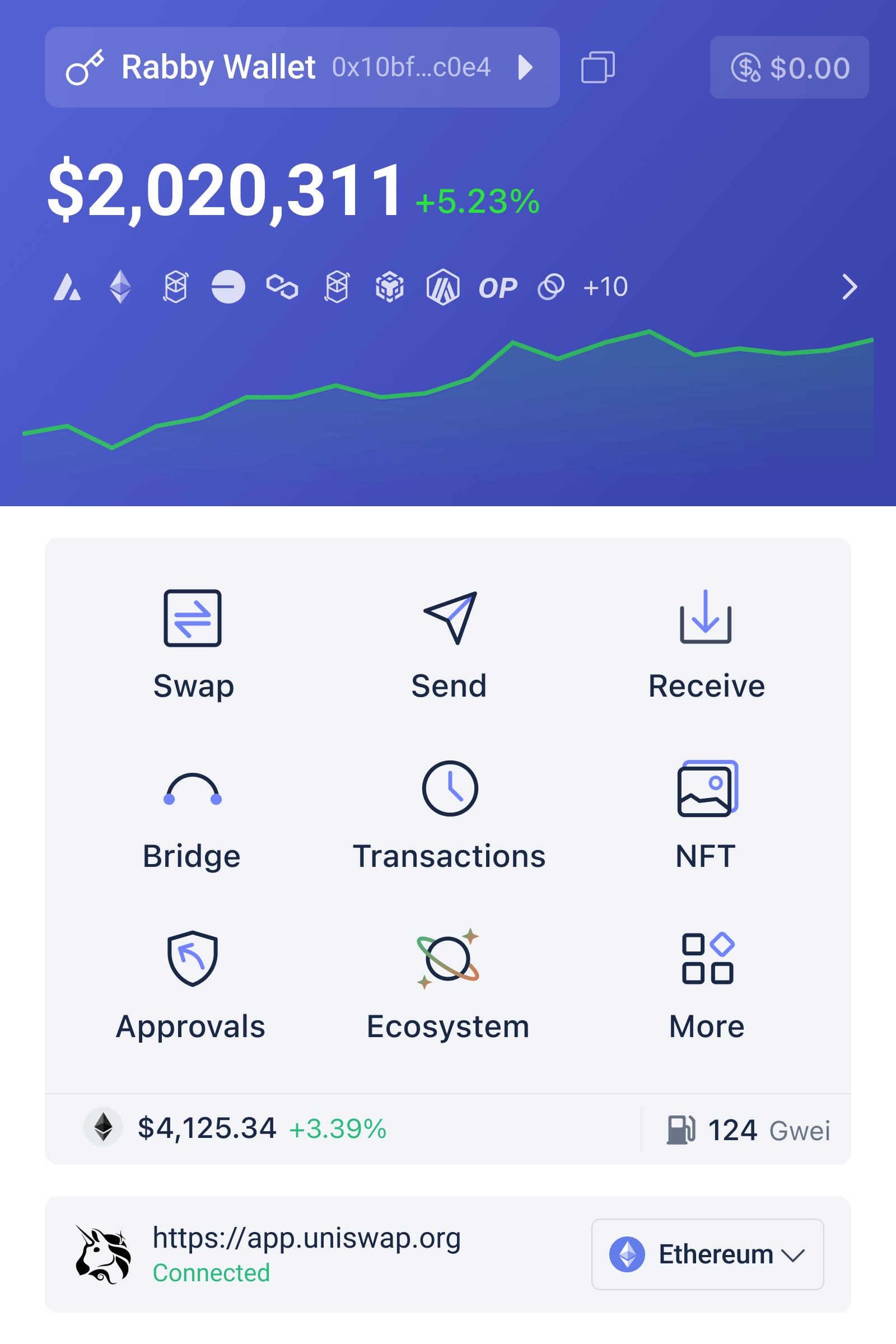
Users installing the rabby extension should treat the browser installation as the beginning of a verification routine, not the end of one. Confirm the official source, check that the extension is the expected wallet, create or import accounts only in a controlled environment, and never reveal a seed phrase to a website, support agent, or pop-up. Before approving a cross-chain transaction, verify the network, recipient, token contract, allowance, destination amount, and the source of the quote.
A practical comparison for US DeFi users
For a small, familiar swap on one network, a direct decentralized exchange route may be preferable because fewer systems are involved. The user can inspect the pool interaction, estimate slippage, and maintain a relatively short chain of custody. This does not eliminate smart-contract or market risk, but it reduces operational complexity.
A cross-chain route becomes more attractive when the desired liquidity or application exists elsewhere. Here, the relevant comparison is not simply “which route is cheapest?” A better question is: which route has the clearest failure mode and the smallest acceptable trust surface? A slightly higher fee may be reasonable if it buys a well-understood asset, a shorter settlement path, and a destination transaction that can be independently verified.
A useful decision framework has four questions. First, what exactly is moving: a native asset, a wrapped representation, or a token issued by another protocol? Second, who controls the intermediate value while the operation is incomplete? Third, what happens if the destination transaction fails or the route expires? Fourth, which permissions remain after completion? These questions translate a vague security judgment into observable conditions.
There is also a US-specific practical consideration. Network fees, reporting records, and asset classifications can complicate the apparent simplicity of a swap. A wallet cannot determine a user’s tax position, and transaction history alone may not capture every relevant economic event. Users should preserve records and seek qualified advice when activity is material or complex. Security and compliance are separate concerns, but both improve when the user can reconstruct what actually happened.
Where the model still breaks
Wallet-level warnings have limits. A wallet may identify a suspicious approval or a destination mismatch, but it cannot reliably predict every economic loss. A legitimate contract can contain an exploitable bug; a sound route can suffer from severe slippage during volatile markets; and a token can lose value even when the transaction executes exactly as intended. Off-chain interfaces can also be compromised while the underlying protocol remains unchanged, creating a deceptive path into an otherwise familiar application.
The deeper unresolved issue is composability. Cross-chain systems do not merely add more blockchains; they multiply dependencies. If a route relies on a bridge, a solver, a price oracle, a destination contract, and a wallet interface, the combined system may be less robust than any individual component suggests. Security analysis must therefore examine interactions and incentives, not just audit labels or interface appearance.
Near-term progress is likely to depend on better transaction semantics: clearer representations of intended outcomes, more reliable simulations, explicit approval management, and warnings that distinguish a genuinely unusual action from ordinary DeFi complexity. If those tools improve, users may be able to access multiple networks without learning every implementation detail. If they merely hide complexity, convenience could increase faster than understanding.
Frequently asked questions
Are cross-chain swaps riskier than ordinary DeFi swaps?
They can be, because they often involve more contracts, networks, intermediaries, and settlement assumptions. The risk is not determined by the word “cross-chain” alone. It depends on the route, the bridge or liquidity provider, the destination asset, the permissions requested, and how failures are handled.
Can a multi-chain wallet guarantee that a swap is safe?
No. A multi-chain wallet can improve visibility by showing transaction effects, network details, token information, approval changes, and potential warnings. It cannot guarantee protocol solvency, prevent every smart-contract exploit, or protect a user who ignores an unexpected request. Final judgment still belongs to the signer.
What should I check before signing a cross-chain transaction?
Confirm the source and destination networks, the exact token contract, the amount expected to arrive, the recipient, the spender receiving approval, the fee, the slippage or minimum-output condition, and what happens if execution fails. If the wallet’s simulation or warning does not match your intended action, stop and investigate rather than signing through the alert.
The central lesson is simple but easy to miss: cross-chain swapping is not one transaction with a longer receipt. It is a coordination problem among networks, contracts, liquidity, and human intent. The best multi-chain wallet does not remove that structure; it makes the important parts legible. For DeFi users, that shift—from trusting a route to understanding its assumptions—is one of the most practical forms of security available today.